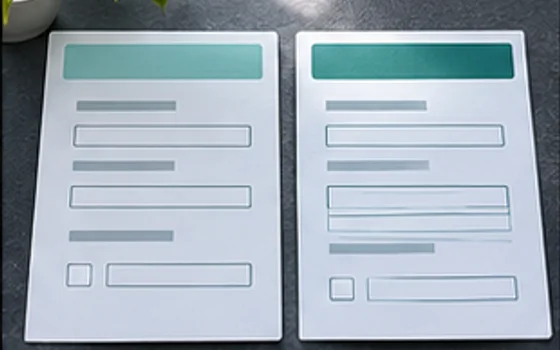
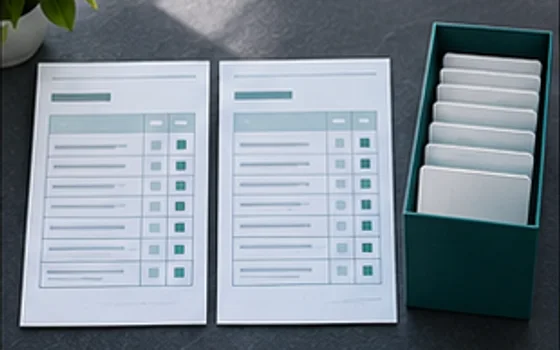
List the fields you want before asking a tool to read a form. Give each field a format and a rule for missing or uncertain information. “Delivery date in YYYY-MM-DD when the form explicitly states it, otherwise null” is a different instruction from asking the model to fill empty cells.
Suppose a sample request contains an account code and a delivery address, but the date box is blank. A plausible date from another line on the form can be wrong. Decide which surrounding notes, if any, can count as evidence and mark the line you used.
| Field | Expected type | If missing |
|---|---|---|
| Reference number | String as printed | Use null and ask the reviewer |
| Delivery date | Calendar date | Use null unless the authorized source states it |
| Region code | One of the documented codes | Use null and record the invalid text separately |
| Note | Short source quote or location | Mark that there is no supporting text |
Record why a field is missing
A blank field, an unreadable entry, and a field marked “not applicable” can have different consequences. If your workflow distinguishes them, add a review status. The person correcting the result should be able to tell whether to read the original form again or ask the submitter a question.
NIST describes confabulation and information risks in generative AI. A form extraction deserves a check even when the output looks like valid JSON. Compare a sample of populated values with the source and inspect missing values that could block work. National Institute of Standards and Technology
Write the rule for each source of a value
Make a small list of fields with the place in the original form you allow someone to use. Suppose an intake form has a requested date, a revised date, and a handwritten note. Tell the extractor which date belongs in the output and what to do when the fields disagree. “Use the revised date only when the form marks it approved” gives a clear condition. If the handwriting is unreadable, return a missing value and record a reason for the human reviewer. The person checking the output should know which part of the form to inspect.
A date appearing in the footer may refer to when the file was printed. A model can return it even if the requested date box is empty. Place a short rule beside the requested date and include a test where the misleading footer date is the only one present. It should still be marked missing. Ask for the source location or short supporting text for values the form actually supplies. A useful record might say “requested date field, page one” and show the value. Keep that location beside the extracted field so the reviewer can open it.
NIST’s generative AI profile describes risks including confabulation and information integrity. A correctly shaped output can contain an unsupported choice. Check the original material and compare it with the produced result before relying on it. When a field causes further work, such as sending a date to another team, treat unresolved status as something an owner has to handle. National Institute of Standards and Technology
Use a small set of forms with known outcomes
Consider three fictional records. One has a clearly stated date and complete reference. One leaves the requested date blank and includes a version date in the footer. One shows two competing dates with no approval. Write the result you expect for each before asking the tool. The first should reproduce the cited date. The second can return a missing date and report a blank field. The third can report a conflict and identify the two places that need review. Use different status words for those conditions if the next step depends on them. They can all use the same missing-value representation for the extracted field itself.
Inspect values that are present but malformed. An identifier may include leading zeroes, spaces, or a character that resembles another one. If your workflow expects the identifier exactly as printed, define which changes a person can make and when the tool should leave the field unresolved. A date with only a month and day deserves the year only if the approved source supplies or explicitly implies it under your rules. Save an example where the missing year should remain open. Include the final label and the source passage that support the expected result.
Decide what the next system can accept
Suppose an import treats a blank date as today’s date. A missing value from the output could schedule work inadvertently. Confirm what your actual system does before you move records into it. Place unresolved cases in the appropriate review route and check that a missing reason does not disappear on export. If several people can change a value after review, keep the original source and the recorded decision accessible to those who need it. Test just a few approved sample records first. Check both a value that should pass and a missing case that should stay pending.
The UK government AI playbook discusses validation and oversight appropriate to how the result will be used. A reviewer can apply a stricter check to fields that affect a date, price, or commitment. For a low-impact note, the reviewer may still want to see what part of the input was unavailable. Record which condition needs confirmation and name who can provide it. If the tool sends an unexpected format, use the team’s normal error-handling route and give the reviewer enough information to investigate. GOV.UK
Compare the test output after any change to the form or destination. If a field moves, add a new example before using the workflow. Ask which evidence the reviewer needs to determine whether a blank was intentional. Save the final rule with the form version so someone can check the result independently when a new input arrives.
Test before file import
Write small sample forms that contain an empty answer, conflicting dates, and a handwritten field the reader may miss. Give each a correct expected result. If a field fails more than once, narrow the parsing rules or route that class of form straight to review. Record which field failed and why rather than reprocessing everything blindly.
The UK government AI playbook discusses validation and human oversight. For a form workflow, require a person to confirm the fields that create a schedule, cost, or obligation before you import them into a system. GOV.UK
Use synthetic forms for early tests. Once the extraction format works, confirm that the real inputs and storage locations are appropriate for the approved tool. Check the first import with a small reversible sample and keep the original record as the evidence.
If the real forms contain restricted data, build a synthetic test record that preserves the difficult cases.