Start with labels that correspond to teams that can act. If “account” and “billing” both cover a request about a canceled account with a remaining balance, write down which team takes it first. Attach each label to a team or to the review queue.
Build a small set of synthetic requests. Include one that clearly fits each category, a request with two plausible destinations, and a message that gives too little information. Ask the tool to return one approved label or “needs review.” Require a few words identifying the evidence behind the choice so a reviewer can correct a misroute.
| Message in the example | Expected route |
|---|---|
| “My monthly statement lists the same charge twice.” | Billing |
| “I cannot view my order after signing in.” | Account access, if the documented rule matches |
| “I need help with my order.” | Needs review |
| “The account is closed and I still see a charge.” | Follow the written ownership rule or route for review |
Make the review route work
Send uncertain tickets to an existing human queue. Give the reviewer the original message and the proposed label. Record which category they chose and what detail made the difference. If a request frequently needs two teams, your routing rule may need to name the first owner and the right handoff.
The field study Generative AI at Work covers AI assistance in a customer support workplace. Use it as an example of why improvements should be examined inside the actual workflow. The study does not establish an error rate for your labels or the best route for your customers. Quarterly Journal of Economics
NIST’s generative AI profile discusses evaluation and the risk of unsupported output. Check the classifier on examples it has not already seen. Pay particular attention to costly misroutes and whether the “needs review” route catches them without hiding everything in that queue. National Institute of Standards and Technology
Write a route someone can use when a ticket has two topics
Ask each receiving team about the action it can take. A billing team can investigate a duplicate charge. An account team can restore approved access or ask for information needed to locate a record. The same message could mention both. Define when the first owner decides and when the other team should be involved. Give the classifier an unknown or review category for cases the rule does not cover. Name the person or team that checks the review queue.
Take an invented ticket that says “I closed my account and saw another charge.” The owner may be billing if the account is already closed and the question concerns a charge. The account team may need to check closure if the customer is unsure what happened. Give each case a response that follows your documented rule. If the message does not say whether the account is closed, ask it to remain in review or request the missing detail through the approved process. Record the reason without guessing a billing outcome. Two tickets with very similar words can need different people.
The study published as Generative AI at Work examines an assistance tool in a customer support setting. It provides context about use in a real workflow. Your labels, local escalation rules, and timing need evidence from your own task. Start with invented cases and have people who own the queues agree what should happen. Quarterly Journal of Economics
Test which labels the receiving teams can correct quickly
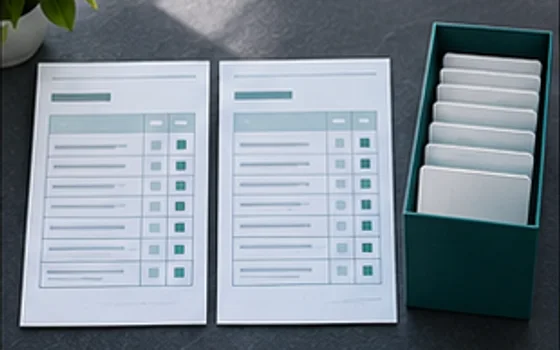
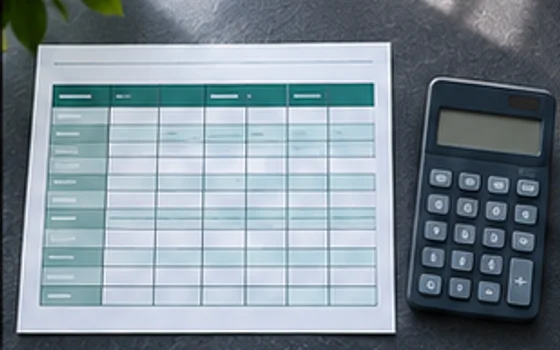
Make a table with example, expected route, approved reason, candidate route, and reviewer outcome. Use each test more than once only when that matches the question you are asking. A small set could have three clear billing cases, two account cases, and five where a reviewer needs more information. If the tool sends all unknown cases to one ordinary queue, check which sort of message it is treating as decisive. A term like “order” can appear in nearly every request. The expected label should follow what the receiving team can do with the evidence. Change the examples or the written rule when the deciding fact was missing from your test.
NIST’s generative AI profile discusses information errors and evaluation as part of managing risk. An overall count can miss a repeated error near a boundary. Compare how many cases went to review and what the human reader found there. A cautious rule may send more ambiguous cases out of automatic routing and save work on another kind of error. Decide which outcomes the teams can handle before accepting the test. National Institute of Standards and Technology
Check cases that look complete and still lack a crucial detail. A customer might explain a billing issue without a reference the approved service needs to look it up. Your policy can allow classification as billing and still require collection of that reference in the next step. A case with unclear ownership may need human review before routing at all. Tell the reviewer which distinction matters. For a live queue, use the team’s permitted data and masking rules. In the early tests, avoid including real names, account numbers, or histories.
Observe the handoff after the label is chosen
Suppose a human reviewer changes an “account” label to “billing” and records that the message describes a settled invoice. Add that explanation to the test results and decide whether the routing rule needs new wording. Other reviews may reveal a missing type of request. Before creating a new label, check who will own it and whether an existing process can handle the work. A label with nobody to act on it can make a mistake hard to see when the ticket disappears from the regular queue.
Record whether the reviewer could resolve the issue without asking for the ticket again. If it took several transfers, examine the first decision that sent it to the wrong place. If many straightforward messages go to review, find which condition could make them clear from the source. Keep examples for any high-cost mistake and run them after changes. Document the test date and routing rules, so a later rule change can be checked with the new team before it becomes active.
Measure the cost of a mistake
Record the route chosen by the tool, the reviewer decision, and whether a misroute created extra work. A false label can delay a customer more than a short human review. Compare those effects before approving more automatic routes.
Follow the same privacy rules for support messages that apply in the rest of the organization. You can work through the entire test with invented records and a sample queue before considering production data.
With provisional categories in place, build a small test set that includes real boundary cases drawn from approved inputs.