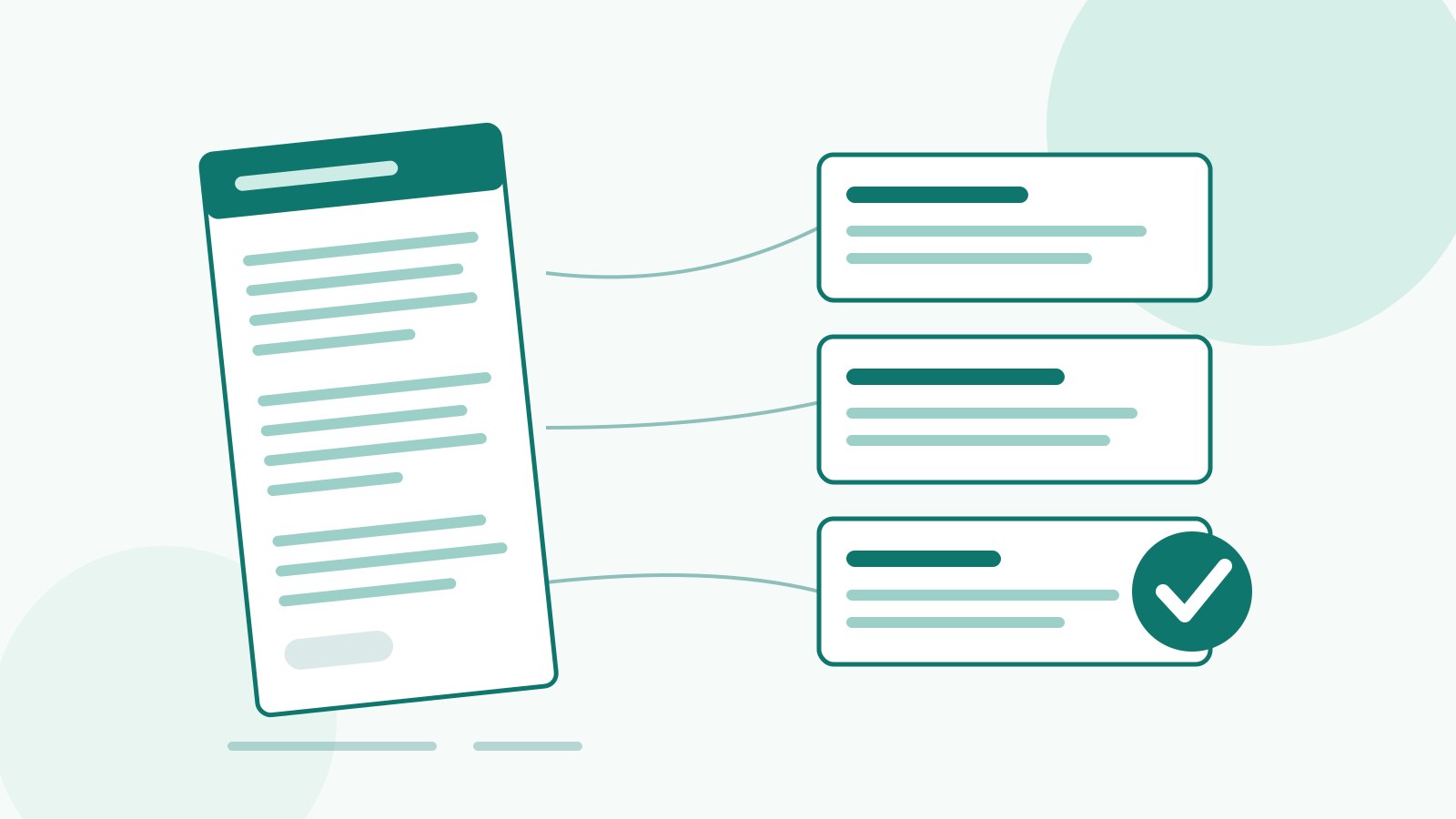
Start with one factual statement from the draft. “The policy covers all contractors” contains a subject and a scope. Find the source that appears beside it. Open the reference yourself and confirm it is the document the draft actually names. Then look for the passage supporting the word “all.”
Check the subject and scope even after you confirm the URL. A real URL can point to a real policy that applies only to contractors in one program. The link works, and the claim still needs correction. Mark the level at which a check fails so you know whether to replace the URL, qualify the sentence, or remove the claim.
Use a small claim log
| What to verify | What a reviewer records |
|---|---|
| Reference exists | Document title, publisher, and link that opens |
| Passage can be found | Page, heading, or identifiable location |
| Passage supports the claim | Which dates, people, or conditions it actually covers |
| Claim uses current information | Version or effective date if it matters |
Say a draft states that “all requests must be filed by Friday.” The policy says “pilots in Region A should be submitted by Friday for review the following week.” Your note can say the date and condition for those pilots. It cannot turn the statement into a deadline for other regions. If that broader claim still matters, look for the correct authority independently.
NIST describes confabulation as a generative AI risk. A generated source title, page number, or quotation can look precise and still be wrong. Opening the reference and reading the relevant passage is the check. National Institute of Standards and Technology
Verify the subject, verb, and date in the same source
Copy the exact sentence with the date, amount, population, or requirement that matters. A claim such as “all contractors have to file by Friday” contains at least three things to check. You need the kind of person governed by the rule, whether it requires filing, and which Friday applies. Open the original source and locate the part that addresses the statement. Use the title and publisher when checking that you have the same document the draft cites. A short quotation or section name can give the next reviewer enough context to find it again.
Check whether the wording is supported for every part of the claim. Suppose the fictional procedure applies to a pilot in one division, and Friday is an internal review target rather than a mandatory cutoff. The source can support a sentence about that pilot. It cannot support a deadline for everyone. Revise the subject and strength of the claim, and keep the source near the new wording. When you make the sentence more specific, verify that another paragraph still does not use the earlier broad meaning. Word changes can affect the advice the reader receives.
NIST’s generative AI profile describes plausible false content and risks to information integrity. A tool might invent a document or quote a line with the wrong meaning. Verify titles, quotes, and cited locations directly. Take care with a long citation chain. Find out if the page you opened refers to another source as the actual authority and consult it when possible. A reference about another topic should be removed or replaced by evidence you have read. National Institute of Standards and Technology
Trace sources that have several versions or jurisdictions
Imagine a note draws its rule from a summary updated last year. The organization may have issued a later policy with a change to dates or coverage. Search the issuer’s site for the current version and compare the effective date. Save the edition you used and any condition relevant to the reader. For something with a regional scope, check whether the region appears in the source itself. If two places have different procedures, write each only for the setting it governs. A version date is easier to verify than a vague claim that the material is current.
A study may support a different kind of statement from a policy. An association observed within one sample cannot by itself establish that one action always produces an outcome. Check who was studied, how the outcomes were measured, and what the researchers concluded. If necessary, describe the setting instead of making a larger claim for the reader. Put your own sample or scenario under a clear label. A claim from invented figures can explain a calculation when it is separate from the observations in the source.
The UK government AI playbook discusses oversight, testing, and monitoring for errors or hallucinations. Use a comparable review step for your own document when an error would affect a work decision. Put the checked sentence, the current passage, and the name of the person who can confirm an outstanding issue together. A second reviewer can see what still needs evidence without opening several drafts. GOV.UK
Use the claim log to fix the whole draft
After confirming the source, search the document for the same fact elsewhere. An incorrect date could appear in the introduction, a table, and a call to action. Update all places that depend on it. If a claim is unsupported, decide whether to remove it or narrow it to the part you can verify. A note such as “only Region A pilot submissions use this review time” can help avoid repeating the earlier wording. Check that the edited link actually opens the version you used. Keep an unresolved question open with a named source contact if appropriate.
Before handing off, ask the next reader to inspect the highest-impact sentence without your help. Give them the draft and the reference. Ask them to state what the source supports in their own words. If they find a condition that changes the action, revise that section and check any related claim. The result can be shared when the reader has enough information to verify the details they need.
Handle missing or contradictory evidence
If the reference opens behind a login you cannot access, request the relevant source through an authorized route or remove the unsupported assertion from the draft. If two documents conflict, inspect the effective dates, jurisdiction, and which one governs the process. Keep both links with your notes if the evidence remains unresolved.
The UK government’s playbook discusses monitoring for hallucinations and checking outputs. Apply that review to every factual statement that could change a reader’s decision, including dates hidden in a table or sidebar. GOV.UK
Before sharing, have a second reader spot-check key claims where the stakes justify it. Give them the original source and the exact sentence from the draft. Their feedback should say what the source can support so you can make the correction.
Use the document-comparison workflow when a citation needs to support a claim about a change between two versions.